by Derf Johnson
“You never want a serious crisis to go to waste. And what I mean by that is an opportunity to do things that you think you could not do before.” – Rahm Emmanuel
Anyone with even a dab of political sense knows the benefits of a “crisis” in terms of accomplishing administration policy goals. As the old saying goes, extraordinary times call for extraordinary measures. But what if there is no crisis? In the case of the Trump Administration, you just invent one.
In January of last year, Pres. Donald Trump did just that by signing an executive order declaring an “energy emergency” in the United States. His rationale: that the U.S. faced an inadequate energy supply, unreliable grid, and inadequate development of domestic energy resources that leaves us “vulnerable to hostile foreign actors” and compromises the integrity of our electrical grid. The only problem: none of this is true.
The U.S. is producing more energy than ever before. According to federal Energy Information Administration data, “In 2024, the United States produced a record amount of energy [of] 103 quadrillion British thermal units, a 1% increase from … 2023. Several energy sources — natural gas, crude oil, natural gas plant liquids, biofuels, solar, and wind — each set domestic production records last year.” The only major fuel source that continues to decline is coal, which is being outcompeted and replaced in the market by cheaper and cleaner energy sources.
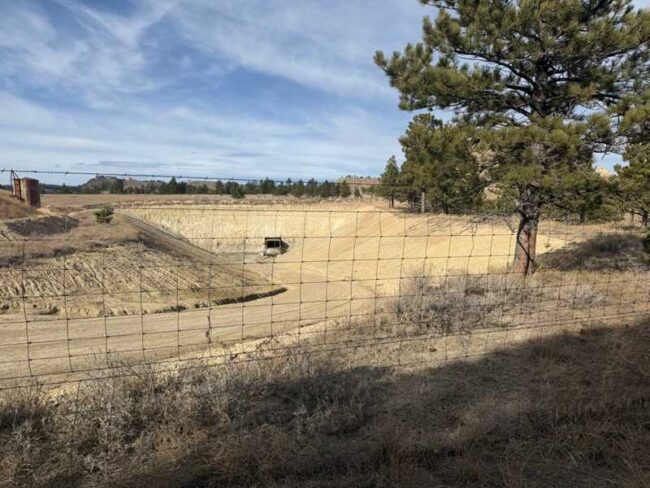
The Bull Mountains Mine sends most of its mined coal to customers in Asia, which doesn’t help address any “energy emergency” in the U.S. Photo by Derf Johnson.
Unfortunately, a direct consequence of Pres. Trump’s “energy emergency” declaration is the rushed approval of major fossil fuel projects across the country, including right here in Montana. The “energy emergency” has allowed federal agencies to basically bypass normal processes for permitting energy projects, and to give short shrift (or entirely ignore) environmental concerns. In summer 2025, relying on the “energy emergency” declaration, the U.S. Department of Interior (DOI) once again approved a massive expansion of the Bull Mountain coal mine north of Billings, which is Montana’s only underground coal mine and sends the bulk of its coal to Asia. This particular expansion has been under litigation for years due to its serious impacts to landowners and the environment. The rushed approval bypassed the normal review process as well as a court order mandating that a more extensive environmental review process must take place in advance of the expansion.
The environmental and social consequences of the Bull Mountain Mine are dire. The mine is destroying the water quantity and quality in the Bull Mountains, a semi-arid region of central Montana where sparse water resources are absolutely essential for wildlife and cattle ranching. What’s more, the coal that’s mined and ultimately combusted in Asia contributes millions of tons of greenhouse gas pollution every year to our climate crisis.
MEIC and our partners could not let this stand. On March 3, MEIC, WildEarth Guardians, and the Center for Biological Diversity, represented by Earthjustice and the Western Environmental Law Center, filed suit in federal court against the DOI for its unlawful approval of the mine expansion based upon a fake “energy emergency.” With any luck, we will get the DOI to comply with the law and to protect the water quality and quantity in the Bull Mountains.
This article was published in the March 2026 issue of Down To Earth.