MEIC is known throughout Montana and the West as a strong advocate for a clean and healthful environment that backs advocacy with hard science and thorough research. We have been called “perhaps the most influential and active environmental organization in the state” and for good reason. For 50 years, MEIC has fought for policies that will affect the Montana environment for generations to come. Below is a list of MEIC’s biggest accomplishments, but does not include the full breadth of our work and success.
At the Legislature
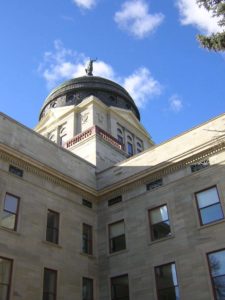
MEIC is the lead voice for the environment at the Montana Legislature. We have played a role in lobbying to establish, protect, and strengthen almost every environmental law on the books, including but not limited to the Montana Environmental Policy Act, the Subdivision and Platting Act, the Major Facility Siting Act, the Strip and Underground Mine Reclamation Act, the Voluntary Conservation Easements Act, the Coal Severance Tax Trust Fund, the Metal Mine Reclamation Act, the Comprehensive Environmental Clean-up and Responsibility Act, the Mega Landfill Siting Act, the Water Use Act, and the Renewable Energy Standard. MEIC has also played a lead role in defeating hundreds of anti-environmental bills that are not listed his.
Victories at a Glance
2025
- The Montana District Court in Great Falls ordered the Legislative Services Division to return to its long-held practice of producing legislative documents related to the drafting of a bill to members of the public under the Montana Constitution’s right to know. The court decided in favor of two Montanans, the Montana Environmental Information Center, and the press in a legal action that challenged a new policy that withheld documents related to legislative bill drafting that have, for decades, been considered public information.
- MEIC’s Derf Johnson received the MT Trial Lawyers Association Appellate Advocacy Award, alongside MEIC Board member Rob Farris-Olsen and former Board member Kim Wilson for their work on a case dealing with the Bad Actor mining law
- In an ongoing battle to defend Montana waters against Canadian coal mining pollution, the DEQ recently denied a petition filed in July by Lincoln County Commissioners that would have doubled the amount of allowable selenium pollution in Lake Koocanusa as well as weakened the definition of “steady state,” a determining factor in assuring that water quality is protected and restored. In this recent decision, DEQ stated that it denied the petition “after consideration of the body of record evidence, including submitted petition materials and the public comments received.” According to the DEQ’s press release, the agency received 305 comments over a period of 30 days. DEQ held a public hearing in Helena on Aug. 13, 2025, at which MEIC presented a sign-on letter with more than 30 signatories that included outfitters, businesses, and organizations. During that time, MEIC generated 201 comments through our website action tool, two-thirds of the 305 comments filed. In addition, on July 31, MEIC organized a community event in Troy, Montana, to discuss the selenium petition as well as the proposed mining project in the Cabinet Mountains Wilderness. More than 30 people attended and submitted comments to Montana DEQ regarding the petition.
- The U.S. and Canada agreed to an International Joint Commission (IJC) at the urging of Tribal and First Nation governments in Montana, Idaho, and British Columbia, and government agencies and NGOs, including MEIC. The IJC will investigate and develop solutions for extensive selenium water pollution flowing into Lake Koocanusa from Canadian coal mines.
- Montana Supreme Court ruling on MEIC’s Right To Know case: On May 29, 2025, the Supreme Court ruled that Montana judges should prioritize government transparency and the Constitutional right-to-know when they consider awarding court fees to winning plaintiffs.
- The PSC agreed with MEIC that Nick should stay as an expert. NorthWestern Energy tried to stop Nick, who planned to testify about climate change, from participating in a rate case as an expert witness. The utility also said the energy engineer sought to offer “improper legal opinions as a nonlawyer” and requested the Montana Public Service Commission strike that testimony. On a 3-2 vote Tuesday, the Montana Public Service Commission supported a staff recommendation to allow the engineer, with the Montana Environmental Information Center, to testify as an expert witness.
- Legislative Victories:
- Possibly the greatest victory this session is the defeat of numerous measures attacking the judiciary and rule of law. Most importantly, a number of bills aimed to make judicial elections partisan in nature, but all failed to pass muster due to bi-partisan resistance. These bills would have hyper-politicized our judicial system and allowed for judges to be elected based on party affiliation rather than competence and experience. Additionally, proposals for the creation of a “general claims” or “court of chancery” failed, which would have required that constitutional challenges be brought in a special, intermediary court with justices hand-picked by the governor (rather than elected by the people).
- Legislators coalesced around support for new and improved transmission projects to improve the reliability of the electric system.
NorthWestern had a slew of bad bills to allow it to avoid Public Service Commission oversight, but those bills failed, as did a number of bills that would have crippled the wind industry in the state by forcing developers to pay outrageous bonds (they already are required to bond) or severely restricted the location of wind turbines (measures that would prevent developers from locating turbines anywhere in the state). - Passage of SB 188, the Community Solar Act (although the Gov vetoed it), which would have allowed communities to develop solar projects and share the energy produced among people who otherwise don’t have access to the benefits of cheap solar power.
- Passage of HB 477, a tiered phaseout of styrofoam food containers (which the Gov also subsequently vetoed).
- MEIC was instrumental in the passage of several interim study bills, among those are: a study of the causes of rising property insurance rates (which was ranked first by legislators among 36 study bills), an electricity transmission study, a study of interstate energy markets, and a study of Montana water quality in relation to toxic Per- and polyfluoroalkyl substances (PFAS) and endocrine disrupting chemicals (EDCs).
2024
- MEIC was successful in helping convince the U.S. Supreme Court to reject NorthWestern Energy’s attempt to stop new rules for toxic air pollution controls at the Colstrip plant in.
- The U.S. and Canada agreed to an International Joint Commission (IJC) at the urging of Tribal and First Nation governments in Montana, Idaho, and British Columbia, and government agencies and NGOs, including MEIC. The IJC will investigate and develop solutions for extensive selenium water pollution flowing into Lake Koocanusa from Canadian coal mines.
- The Montana Supreme Court ruled in favor of MEIC, affirming a 2022 district court ruling that required NorthWestern Energy to pay a fine for failing to invest in Community Renewable Energy Projects (CREPs).
- The Bureau of Land Management announced that it will not issue new coal leases in the Powder River Basin, the largest coal-producing region in the U.S. MEIC and coalition partners doggedly pursued this end to federal leasing over three presidential administrations and several rounds of litigation – and will endeavor to protect it against future administrations.
- MEIC launched our Community Connectors Program to engage a handful of dedicated individuals who will act as advocates and liaisons between MEIC and the communities in which we work.
- In collaboration with our allies and supporters, MEIC helped thousands of Montanans across the state speak up for the environment in front of the Public Service Commission, Legislative Interim Committees, the Department of Environmental Quality (DEQ), and the Montana Consumer Counsel.
- MEIC successfully beat back a harmful state law passed in 2023 (HB 576) that weakened protections for our waterways from coal mining pollution through litigation, organizing, and the federal approval process.
- MEIC and our partners leveled oral arguments in front of the Montana Supreme Court twice this year, for the protection of the Smith River and to stop NorthWestern Energy’s methane plant near Laurel.
- In December, the Montana Supreme Court affirmed the major findings of Held v. State of Montana, a youth-led trial that relied on MEIC’s expertise and decades of our work with many of our allies’ on environmental advocacy in Montana.
- MEIC’s Deputy Director Derf Johnson testified in front of Congress twice in 2024, advocating against corrupt mining companies.
2023
- MEIC lobbied for the successful passage of two right-to-know laws and defended the Montana Constitution, clean water, clean energy, and our climate at the 2023 Montana Legislative Session.
- In April, a district court judge ruled in favor of MEIC and local communities based on air quality and climate issues against NorthWestern Energy’s polluting methane gas plant near Laurel.
- A federal judge ruled against Signal Peak’s request for a coal mine expansion in a lawsuit from MEIC and partners in February.
- In November, the Montana Supreme Court vacated an expansion permit for the Rosebud Mine, the sole supplier of coal for the Colstrip power plant.
- MEIC supporters came from far and wide to celebrate MEIC’s 50th Anniversary with outdoor activities and a party!
2022
- After nearly a decade of advocacy, litigation, and working with partners, the Smith River is one step closer to protection from a damaging copper mine on its headwaters after an April 2022 decision by a Montana state judge.
- MEIC won a lawsuit that found the Rosebud coal mine expansion was illegal due to damage to Colstrip area waters, wildlife, and the climate.
- With three new staff positions, MEIC has expanded its capacity for movement building, working on land use issues, and helping raise public awareness of Montana’s largest contributors to the climate crisis.
- Two Bull Mountain coal mine legal victories have, so far, prevented more than 190 million tons of greenhouse gasses from entering the atmosphere.
- With urging from MEIC’s members and supporters, the State of Montana adopted new, more energy efficient building codes in June 2022, which will reduce carbon emissions in new buildings and enable cities and counties to implement net-zero and solar-ready building zones.
- A district court decision in November 2022 vacated a subdivision permit in Big Sky due to Montana DEQ’s faulty analysis of the development’s contribution to water pollution in the Gallatin River.
- A district court decision in April 2022 requires NorthWestern Energy to pay $2.5 million in fines to Montana’s Low-Income Energy Assistance Program due to its failure to purchase energy from Community Renewable Energy Projects (CREPs).
2021
- A legal victory prevented a large expansion at the Spring Creek coal mine on the basis that the operator didn’t sufficiently consider emissions such as CO2 and mercury.
- MEIC and partners stopped the proposed Rock Creek mine in the Cabinet Mountain Wilderness due to impacts to bull trout and grizzly bears.
- MEIC stopped dozens of anti-environment and anti-public health measures at the Montana legislature by helping Montanans contact legislators over 46,000 times through an updated website.
- MEIC and partners defeated a last minute Trump-era rule designed to prevent consideration of science in public health and environmental decision-making.
2020
- MEIC secured a PSC decision preventing NorthWestern Energy from charging approximately $10 million to customers for costs associated with a prolonged outage at the Colstrip coal-fired power plant.
- MEIC secured a PSC decision preventing NorthWestern Energy from purchasing a larger share of the Colstrip coal-fired power plant.
- MEIC and Earthjustice receive favorable Montana Supreme Court order upholding the vacature of the proposed Montanore mine project’s discharge permit in the Cabinet Mountains Wilderness.
- MEIC and partners win a federal court challenge reinstating a Bureau of Land Management methane waste rule that the Trump administration attempted to dismantle.
- MEIC wins a U.S. District Court challenge that results in the cancellation of oil and gas leases on over 145,000 acres of public land in Montana due to potential water quality and climate impacts.
- MEIC wins a Supreme Court victory striking down Montana Public Service Commission decisions that intentionally undermined renewable energy projects by weakening contract terms.
- Colstrip Units 1&2 permanently close in response to economic pressure combined with MEIC’s legal settlement requiring closure by 2022.
2019
- MEIC leads a successful legislative lobbying effort in defeating dozens of anti-environmental bills and blocking multiple proposals to bail out NorthWestern Energy and its investment in Colstrip.
- MEIC wins two major Montana District court challenges against mines that would impact water quality and quantity in the Cabinet Mountains Wilderness.
- MEIC wins a court case against Montana Public Service Commission restoring favorable contract lengths for renewable energy projects.
- MEIC blocks an expansion of the Spring Creek coal mine by arguing climate change impacts must be evaluated alongside the mine’s economic benefits.
2018
- MEIC wins lawsuit requiring enforcement of the Bureau of Land Management Methane Waste Rule without delay.
- MEIC won a lawsuit stopping BLM from allowing coal mining and drilling on over 15 million acres.
2017
- MEIC wins a lawsuit preventing expansion of Signal Peak Energy’s Bull Mountain Coal Mine due to lack of a climate change impact evaluation.
2016
- Reached Historic Settlement with Colstrip Owners, Units 1 & 2 to Close by 2022
- Victory for The Bitterroot! MEIC Won State District Court Appeal, and Wastewater Permit for Bitterroot Valley’s Grantsdale Subdivision rejected
- State district court rules in MEIC’s favor and revokes a water pollution discharge permit for the Rosebud Mine
- MEIC, Tongue River ranchers, Northern Cheyenne tribal members, and other activists, won a decades-long battle to stop the Tongue River Railroad and the massive Otter Creek coal mine.
- Montana Public Service Commission ruled in MEIC’s favor regarding NorthWestern Energy’s cost recovery for Colstrip Unit 4 outage, returning 8 million dollars to consumers.
2015
- Board of Environmental Review (BER) unanimously ruled in MEIC’s favor and repeals permit for Bull Mountain Mine Expansion, the state’s only underground coal mine.
- Court ruled in MEIC’s favor and protects grizzly bear habitat on state lands in NW Montana.
- EPA releases the Clean Power Plan, requiring Montana to reduce emissions by 47% by 2030.
2014
- MEIC won lawsuit requiring the U.S. EPA to regulate coal ash, the second largest unregulated waste stream in the U.S.
- MEIC is instrumental in convincing WA regulators to limit further investments in Colstrip.
2012
2010
2007
- MEIC leads the successful campaign to stop the proposed Roundup coal-fired power plant.
2005
- MEIC forms a coalition that successfully lobbies the legislature to adopt the Montana Renewable Energy Standard.
2004
- Initiative 147, which would have repealed I-137, is defeated by the voters.
2003
2002
- MEIC keeps Holcim Cement Co. from burning tires, smelter slag, and hazardous waste.
2000
- MEIC wins a lawsuit that stops the construction of a sprawl-inducing Forestvale interstate highway interchange in the Helena valley.
1999
- MEIC wins a lawsuit in which the Montana Supreme Court declares the constitutional right to a clean and healthful environment to be fundamental.
- Preserved the Rocky Mountain Front, protecting 405,000 acres of national forest land along the Rocky Mountain Front from mineral exploration and development for the next twenty years.
- MEIC successfully lobbies the Montana state legislature to adopt a net-metering program for NorthWestern Energy customers who want to rely on small scale renewable energy systems.
1998
1997
- Pegasus Gold Co. is fined $37 million for violations at the Zortman/Landusky mines and files for bankruptcy.
1995
- MEIC wins a lawsuit that ended the confidentiality of legislative bill draft files.
1994
- MEIC wins the first of three lawsuits over the reclamation of the Golden Sunlight mine.
1989
- MEIC wins a lawsuit that stopped CENEX from drilling for oil on the North Fork of the Flathead River.
1988
- Sunshine Mining Co. abandons plans for a gold mine west of Lincoln.
1985
- A phosphate detergent ban is passed by the Legislature.
1984
- MEIC wins a lawsuit that stopped the Montana Power Co. from building the Haines Pipeline along the Rocky Mountain Front.
1980
- Air quality standards are adopted by the Board of Health and Environmental Sciences.
1975
- Coal severance tax raised to 30% by the Legislature.