by Nick Fitzmaurice
The Bonneville Power Administration (BPA) is a federal electricity and transmission marketing agency that covers much of the Pacific Northwest and plays a critical role in the affordability and reliability of the electricity system in the region. As of this writing, the agency was poised to announce its new Administrator and CEO, with former Montana Public Service Commissioner Travis Kavulla positioned as the likely contender.
BPA has the potential to generate more than 17,000 megawatts of electricity at cost to customers, largely from federal dams across the Northwest, and is required to prioritize selling this low-cost power to public power entities such as rural electric co-ops and municipal utilities. BPA also owns and operates a major high-voltage transmission system covering over 15,000 miles, including a portion of western Montana. While BPA is technically housed within the U.S. Department of Energy (DOE), it has historically operated with significant autonomy as a non-profit federal agency that covers its own operating costs by selling electricity and transmission services. Given this unique agency structure, it often appears that BPA is accountable to no one but its own internal leadership.
BPA’s regional positioning is extremely important to regional power sharing across the West as two competing Western energy markets emerge to facilitate the buying and selling of electricity between utilities for anticipated needs up to a day in advance. The more advanced proposal that launched in May 2026 is the Extended Day-Ahead Market (EDAM), operated by an independent, non-profit regional governing body called the Regional Organization for Western Energy (ROWE). The less developed proposal, Markets+, is not slated to go live until October 2027 and would be operated by the Southwest Power Pool (SPP), headquartered in Arkansas. BPA announced highly controversial plans to join Markets+ in May 2025, despite numerous analyses showing this would cost electricity customers millions of dollars more compared to joining EDAM.
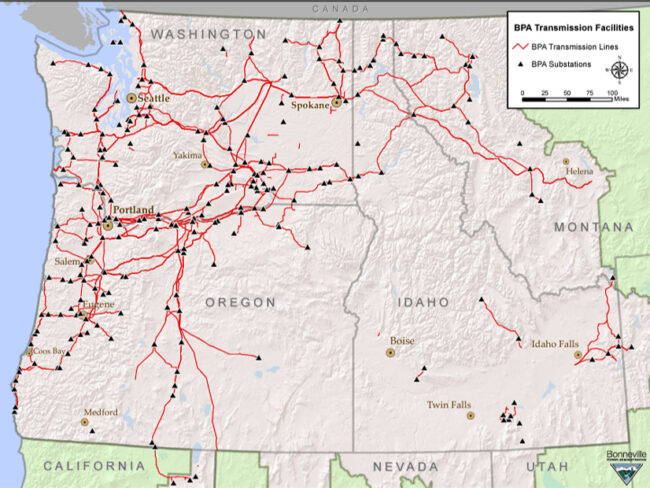
Since BPA owns and operates 75% of the high-voltage transmission system in the Northwest, its decision makes it more difficult for other utilities and transmission operators, such as NorthWestern Energy, to choose the more transparent and robust day-ahead market implemented by the ROWE. Last year, Earthjustice, on behalf of MEIC and several partner organizations, filed a yet-unresolved challenge to BPA’s decision in federal court because BPA failed to follow its own rules and related federal requirements in making its decision.
A low-cost carbon-free energy system will require a sophisticated and geographically diverse market system to optimally dispatch clean electricity from where it is available to where it is needed. EDAM has the potential to unify the Western grid into a single, highly efficient energy market, having grown out of an organic expansion from the already wildly successful real-time Energy Imbalance Market (EIM).
That has created a whopping $8.62 billion in benefits to market participants since 2014 (including more than $223 million in benefits to NorthWestern since 2021). Unfortunately, SPP’s proposed Markets+ appears to be designed to extract profit from a nascent Western market landscape, threatening to bifurcate the Western electric grid and ensure more expensive and less efficient trading of electricity across the region.
For months, BPA has bulldozed ahead with its market decision. However, the DOE uncharacteristically joined the debate at the beginning of May, instructing BPA staff to pause work toward joining Markets+ while DOE weighs in on the agency’s market decision. Hopefully, the incoming Administrator can help get BPA on track and create a path to a more affordable and efficient single West-wide energy market.
This article was published in the June 2026 issue of Down To Earth.