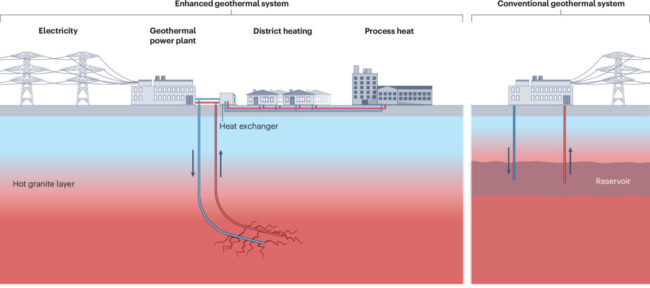
Image via Berkeley Lab.
by Nick Fitzmaurice
One of the oldest forms of energy known to humans, geothermal, is experiencing a resurgence. This resurgence is driven by technological advancements that increase the efficiency and cost-effectiveness with which we can access the earth’s heat. As developers transition from successful pilot projects toward commercialization, clean energy advocates are beginning to ask if this new geothermal energy technology — enhanced geothermal systems (called “EGS” by those in the biz) — could be an essential component of a reliable and affordable carbon-free electric grid.
Geothermal energy generation can be carbon-free, can supply energy on-demand to complement low-cost wind and solar, requires no fuel, has a minimal land footprint, and puts oil and gas workers and infrastructure to work for the clean energy transition. This all sounds too good to be true, but as costs for enhanced geothermal continue to fall, this technology may soon be cost-competitive with other forms of energy generation, helping to meet clean energy goals and ease our reliance on fossil fuels.
Traditional geothermal power generation has been confined to limited regions around the world where near-surface geothermal activity coincides with high temperature underground water reservoirs for easily harnessing the earth’s heat. Enhanced geothermal, on the other hand, strives to access the earth’s heat in virtually any geographic location, driving down costs by deploying drilling techniques honed in the shale gas boom while mitigating the environmental concerns for water contamination and induced seismicity associated with drilling for oil and gas. Leading developers are now slashing drill times (majorly reducing costs), reaching well depths of 15,000 feet or more in just a few weeks, a fraction of the time previously thought possible. Enhanced geothermal goes deeper than traditional geothermal energy generation and brings its own water, expanding the technology’s geographic viability beyond near-surface naturally occurring super-heated reservoirs.
While geothermal energy currently meets less than 1% of global energy demand, the International Energy Agency projects the global technical potential of geothermal electricity generation at approximately 600 terawatts (TW), or 200 times the current global electricity demand. While the economically feasible “market potential” is estimated at 800 gigawatts (GW) globally (that’s about 25% of global electricity demand), further technological breakthroughs could continue increasing this potential. (For reference, NorthWestern Energy’s average electric load in Montana is around 760 megawatts (MW). 1 TW = 1 thousand GW = 1 million MW.)
As the technology improves, enhanced geothermal leaders are making headlines. Texas-based Fervo Energy’s first 3.5 MW project is up and running in Utah, and its second, much larger 500 MW project is under development nearby. It is set to come online in two stages in 2026 and 2028.
MEIC is following and sharing these developments with decision-makers and the public, including Montana’s Energy and Technology Interim Committee, which is also interested in the prospects of enhanced geothermal. MEIC has been working with members of that committee as it considers bringing enabling legislation that sets reasonable guardrails around enhanced geothermal development for the 2027 legislative session. We also hosted a webinar on the topic in November featuring Dr. Roland Horne, Director of the Stanford Geothermal Program. A recording of that webinar can be viewed on MEIC’s website along with a forthcoming geothermal energy fact sheet.
This article was published in the December 2025 issue of Down To Earth.