If you care about the climate and your energy bills you need to know what’s in it.


If you care about the climate and your energy bills you need to know what’s in it.

Protecting and advancing air and water quality standards to ensure a clean and healthy climate for future generations. Campaign areas include fighting hardrock mines and pushing for air pollution regulations at power plants and industrial pollution sources.

Reducing our dependence on fossil fuels through an equitable transition to renewable and clean energy sources. Campaign areas include NorthWestern Energy accountability, development of clean and affordable energy, promotion of energy efficiency, and fighting coal, oil, and gas development and use in Montana.
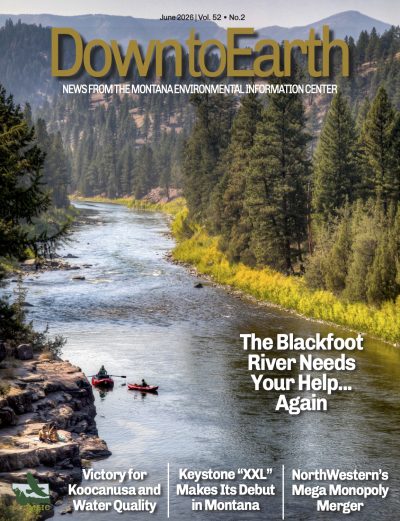
On September 29, Earthjustice and Western Environmental Law Center, on behalf of MEIC and Northern Plains Resource Council, filed a challenge to DEQ’s continued failure to analyze, disclose, and consider the impacts of greenhouse gas emissions from one of the largest pollution sources ever to be permitted in Montana.
Across Montana, the quiet spread of exempt wells is creating a big problem for our rivers, streams, and drinking water.
Working to overcome obstacles for transmission development, MEIC helped fund a study by the independent energy consulting firm Energy Strategies to examine transmission needs for improving Montana’s connection to other states in the West.
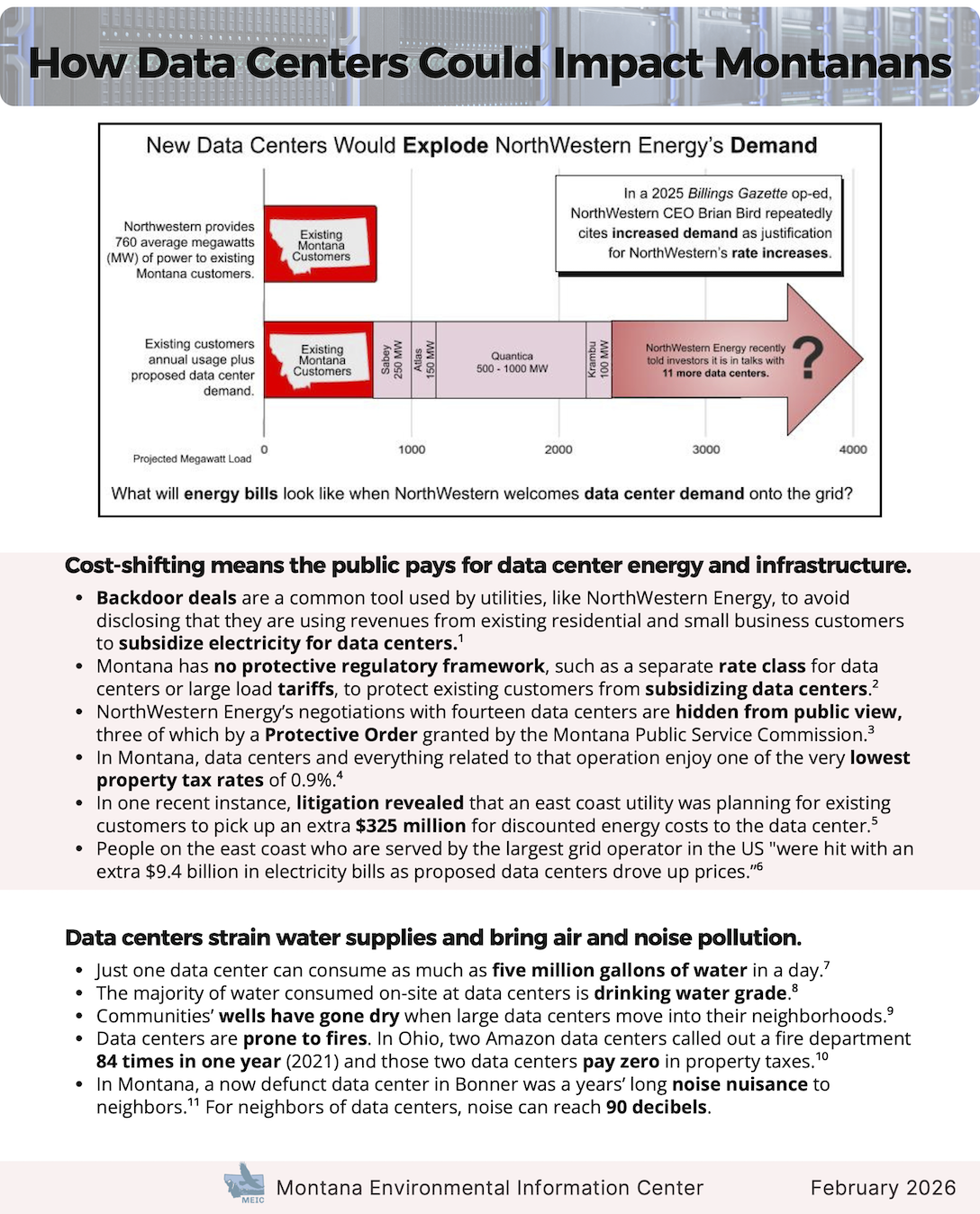
NorthWestern Energy wants to provide electricity to energy-guzzling data centers while it evades its legal obligations to existing customers.
For 50 years, MEIC has worked to keep Montana’s air and water clean. We have stopped dirty acid mines and helped pass and defend strong pollution control laws. And it’s all made possible by our members.
MEIC is made up of thousands of Montanans who care deeply about this state – our home. This strong membership has allowed MEIC to remain independent and to always fight for what is right. We would love to have you as a member too.
Oct. 20, 2025 – The new guidance will be closely watched by groups like the Montana Environmental Information Center. MEIC has sued DEQ, claiming its current greenhouse gas assessments aren’t sufficient to comply with Held.
Oct. 17, 2025 – “A lot of people have already heard the data center side — that they’re great for the economy, they’re great for jobs, they’re great for everybody and everything,” Anne Hedges, executive director of the Montana Environmental Information Center, told about 70 people at a forum on the issue in Butte Thursday night. “But a lot of other places in the nation have been experiencing something very different.”
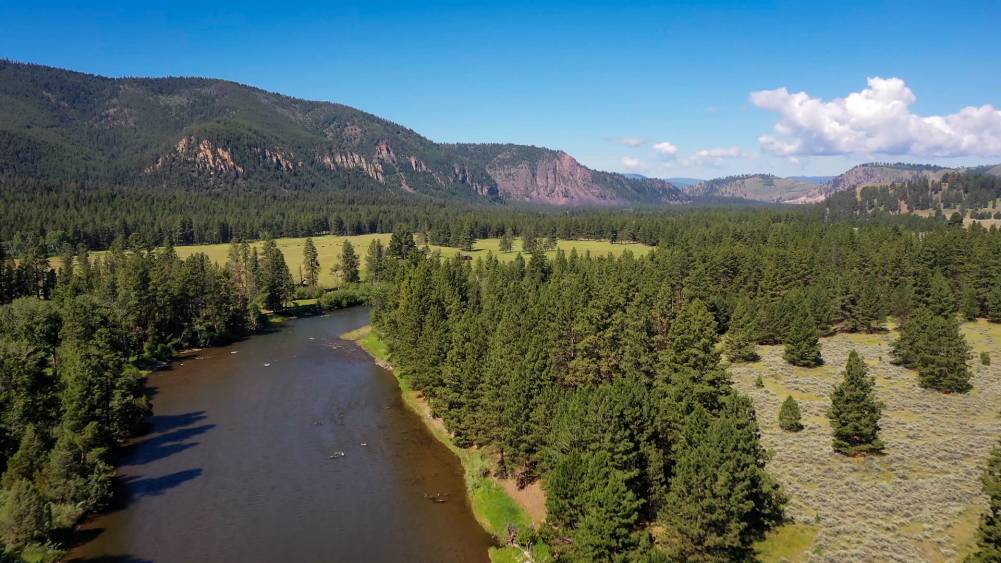
Montana’s Smith River is renowned worldwide for its clean water, rugged canyon scenery, and blue ribbon trout fishery. The Smith is Montana’s only permitted recreational river. The permitted section of the Smith River winds 59 miles through a remote canyon in the Big Belt Mountains. Montana Fish, Wildlife, and Parks classifies the Smith River’s fishery as high-value, owing to its bountiful population of rainbow, brown, westslope cutthroat, and brook trout. The canyon walls of the Smith also boast some of the best examples of Native American pictographs in Montana.
Montana’s Smith River is an extraordinary resource, and deserves our most rigorous effort to protect it from mine pollution and dewatering. Montana Governor Greg Gianforte and the Department of Environmental Quality Director Chris Dorrington will make critical decisions that will determine the future of the Smith River and the Sheep Creek Mine.
Please contact Governor Gianforte and Director Dorrington. Let them know that the Smith River is an incredibly important place for the people of Montana and across the country and world, and should not be sacrificed for temporary and risky mining activities.
The Smith River and its tributaries provide crucial habitat and spawning grounds for regional trout fisheries. The Sheep Creek drainage accounts for over half of tributary spawning of rainbow trout in the Smith River drainage, and rainbow trout have been known to travel nearly 200 miles round-trip from the Missouri River to spawn!
The Smith River depends on clean cold water from its tributaries to sustain the aquatic life within its banks and the agricultural operations along it. Demands on the river’s waters already often exceed available flows in many years, creating challenges for downstream water users.
P: (406) 443-2520
E: meic@meic.org
324 Fuller Ave, #C-8
Helena, MT 59601
Mailing addresses:
P.O. Box 1184, Helena, MT, 59624
225 W. Front, Missoula, MT, 59802