by Shannon James
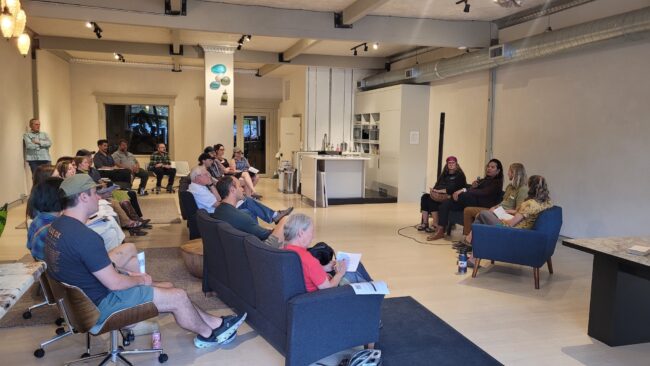
As part of Missoula Climate Solutions Week, MEIC hosted a panel exploring the impacts of nuclear energy — a topic that remains divisive among climate advocates. While MEIC has long raised concerns about the cost and feasibility of nuclear power, this discussion focused on its broader social, environmental, and justice consequences.
Panelists included MEIC’s Nick Fitzmaurice, Rep. Shelly Fyant (D-Arlee), and Honor the Earth’s Northern Cheyenne Community Organizer Otto Braided Hair III.
Fitzmaurice provided background on Montana’s history with nuclear energy and highlighted two 2025 bills sponsored by Rep. Gary Parry (R-Colstrip) aimed at encouraging nuclear energy development in the state: HB 623 allows the siting of nuclear waste storage facilities in Montana, and HB 696 authorizes uranium conversion and enrichment sites in the state.
Rep. Fyant shared her experience carrying an amendment to HB 623 that would have required local and Tribal approval before citing nuclear waste facilities — an amendment that passed the House but was removed in the Senate. She emphasized that nuclear development raises issues of environmental justice, where the nuclear industry has historically disproportionately impacted indigenous communities.
“We can do better,“ Rep. Fyant said. “There is more affordable, sustainable, reliable power in wind, solar, and geothermal.”
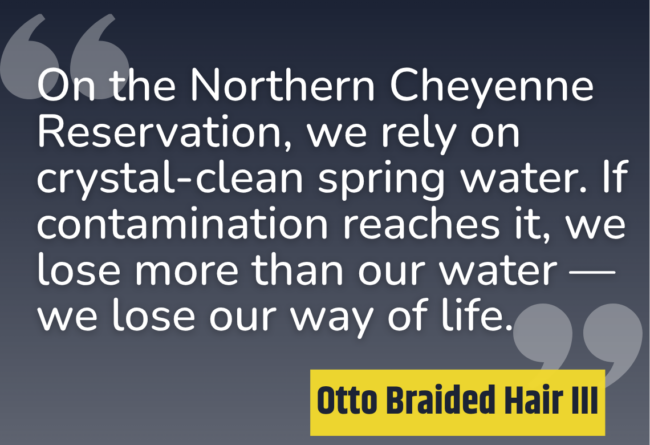 Otto Braided Hair lives on the Northern Cheyenne Nation, just south of the Colstrip power plant. NorthWestern Energy proposes to replace the Colstrip plant with a nuclear power plant. Braided Hair spoke about the risks to his community and to sacred water sources, saying “Imagine having radioactive waste just miles from your home. On the Northern Cheyenne Reservation, we rely on crystal-clean spring water. If contamination reaches it, we lose more than our water — we lose our way of life. In our language, ma’kaata means money, but ma’kaata is not worth more than our children. It’s not about what’s best for industry. It’s about what’s best for the land.”
All three panelists emphasized that nuclear power remains an expensive and risky distraction from safer, cheaper, and cleaner renewable energy options already available in Montana. They pointed to rising energy needs from data centers as a key factor driving renewed interest in uranium processing and nuclear energy development (see article on pg. 5).
They also proposed a question to attendees: Who among us would dive down the dangerous nuclear path if a facility were being proposed in their own backyard?
Nuclear has always been high risk, and with recent federal deregulation, it has become even more dangerous. Safety is being pushed aside as the Trump Administration mandates expedited approval of new reactors. Even if small modular reactors existed in the U.S. — they currently don’t — we should all be able to agree that public health and safety must come before industry interests. Want to see the full discussion? Check it out on MEIC’s YouTube channel!
This article was published in the December 2025 issue of Down To Earth.