by Katy Spence
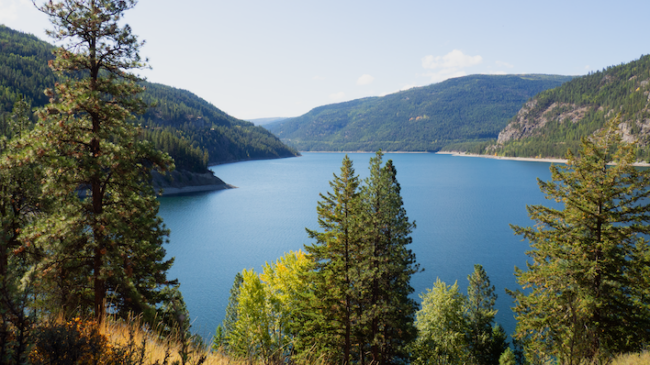
 In an ongoing battle to defend Montana waters against Canadian coal mining pollution, the Montana Department of Environmental Quality (DEQ) denied a petition from Lincoln County Commissioners in September that would have doubled the amount of allowable selenium pollution in Lake Koocanusa. While the work is far from over, this is an indication that Montana DEQ remains a solid partner in protecting our water from Canadian pollution and – perhaps more importantly – that public comments and community action are still effective ways to protect Montana resources.
The selenium in Lake Koocanusa and the Kootenai River emanates from massive open-pit coal mines in the Elk Valley of British Columbia. The mines are owned by Glencore, a Swiss-headquartered multinational commodities trader that has a well-known reputation for corruption, bribery, and environmental damage.
 In 2020, DEQ adopted a “site-specific” standard for selenium of 0.8 ?g/L (micrograms per liter) in Lake Koocanusa, due to overwhelming stakeholder input and scientific evidence that this is more protective for aquatic life. Glencore (and its predecessor Teck Coal) see the standard as a threat to their bottom line, and actually tried to repeal the standard through a review process at the Board of Environmental Review.
However, in a surprising move, the Lincoln County Board of Commissioners (who represent the far northwest Montana county and the watershed most impacted by Glencore’s pollution) submitted a petition to DEQ in July 2025, requesting that it weaken the water quality standard for selenium from 0.8 to 1.5 ?g/L, as well as weaken the definition of “steady state,” a determining factor in assuring that water quality is protected and restored.
DEQ held a public hearing on Aug. 13. A dozen opponents spoke against the petition, including a number of partner organizations and outfitters in northwest Montana. Only one person spoke in favor of the petition – one of the commissioners who brought it forth.
After denying the petition, DEQ stated in an email that it denied the petition “after consideration of the body of record evidence, including submitted petition materials and the public comments received.” Many MEIC members and partners spoke out against what seems to be a politically-motivated move by the Lincoln County Commissioners.
There is no scientific justification for weakening the current standard. Fish in Lake Koocanusa showed unhealthy levels of selenium at water quality levels of 1.5 ?g/L. While selenium is beneficial to human health in trace quantities, excessive selenium has been shown to result in sudden and severe crashes in fish populations by causing a significant reduction or elimination of reproductive capacity. There are multiple species of fish in the lake that regularly exceed selenium standards, such as longnose sucker, northern pike minnow, and redside shiner.
The decimation of fish populations would not just be an ecological disaster for the watershed but would compromise the recreation economy in northwest Montana. Boating and fishing are Montana’s second largest recreational activity, accounting for $149 million in economic activity.
Further downstream, the Kootenai River in Idaho has been deemed impaired due to excessive amounts of selenium flowing from Canada. In the coming months, DEQ may be considering listing Lake Koocanusa as impaired due to excessive selenium, which will help act as a political lever to continue fighting for accountability from our northern neighbors. This process will likely come with a comment period.
MEIC has been to court in defense of these protective standards, and we are closely following the International Joint Commission’s efforts to mitigate and reclaim the selenium pollution emanating from the coal mines in B.C. We won’t stop fighting for the health of the threatened watershed.
This article was published in the December 2025 issue of Down To Earth.