by Peyton Olson
Effective activism has always depended on meeting people where they are, and in today’s world, that increasingly means online. Social media platforms, website action portals, and email newsletters have become essential avenues for advocates to amplify their message, reach wider audiences, and coordinate efforts. The tools used today are evolving, but the core strategies of activism remain the same: create awareness, build community momentum, and bring about positive change.
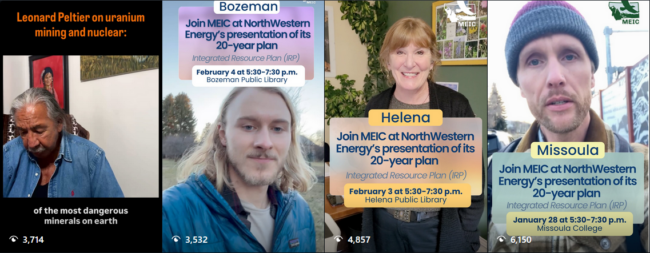
Thousands of people are watching MEIC’s Instagram videos. Watch along: @meic406
MEIC has had digital platforms for years, but the last several years has shown how important this is to our grassroots organizing. Online action isn’t a replacement for in-person efforts, but online engagement is often the first step from awareness to real-world participation. For example, someone who has never attended a public meeting or written a letter to an elected official might learn about a threat to a beloved river from MEIC’s social media that moves them to take action for the first time. Digital engagement is crucial to reach the next generation of Montana environmentalists.
Last summer, when MEIC caught wind of a petition to allow more selenium pollution from Canadian coal mines into Montana’s Lake Koocanusa, digital activism played a crucial role in the successful pushback. Through online education, email action alerts, and targeted phone calls, MEIC helped Montanans understand the threat and how they can take action. DEQ stated that the hundreds of online comments and solid turnout at the public meeting ultimately led it to deny the petition.
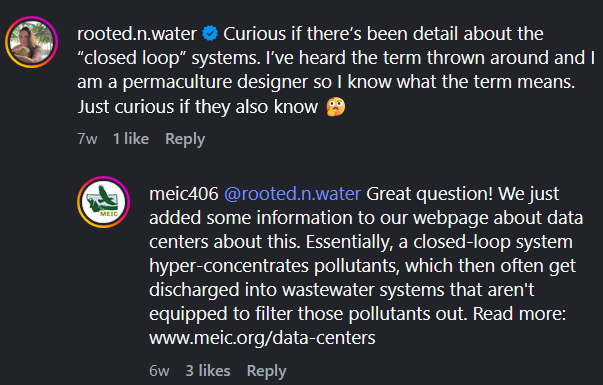
Social media is a great way to respond to concerns and educate the public.
More recently, MEIC’s work on proposed data centers in Montana (see article on pg. 6) has shown how harnessing the speed and reach of social media can rapidly build awareness and mobilize communities on an issue. Like wildfire, the organic spread of the events online drew large crowds to our data center forums across the state, informing people who might never have known these massive facilities were being proposed in their community. What corporations hoped would fly under the radar became a wave of public pressure demanding transparency and accountability.
The environmental challenges we face require an educated public and sustained action. Online activism is how MEIC can meet people where they are, share environmental educational content, turn awareness into action and concerned individuals into a community of advocates fighting for Montana’s future.
This article was published in the March 2026 issue of Down To Earth.
Read full issues of Down to Earth here.