
Data Centers: Threats to Water and Energy Bills
While large data center projects may appear promising at first glance — touting the potential for economic growth and infrastructure investment — the processes that safeguard our environment, electricity bills, public health, and infrastructure are being trampled by the overeager juggernauts of “opportunity.”
Many communities in the U.S. have already pushed back on recent data center development or suffered harm following their development, and Montanans are joining the fray.
MEIC is dedicated to ensuring that folks are educated about what data centers are, what they could mean for Montana communities, and what sideboards are needed to keep them from using inordinate amounts of water and energy, raising electricity prices, and running roughshod over Montana governance agencies.
MEIC has hosted data center panel discussions in communities across Montana. You can watch recordings of those events here.
Quick links:
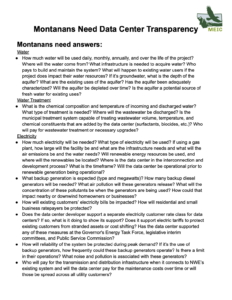
Questions about Data Centers That Need Answers
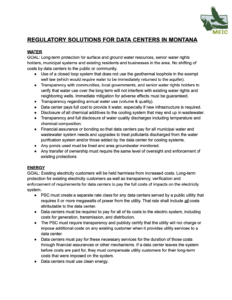
Regulatory Solutions for Data Centers in Montana
What is a data center?
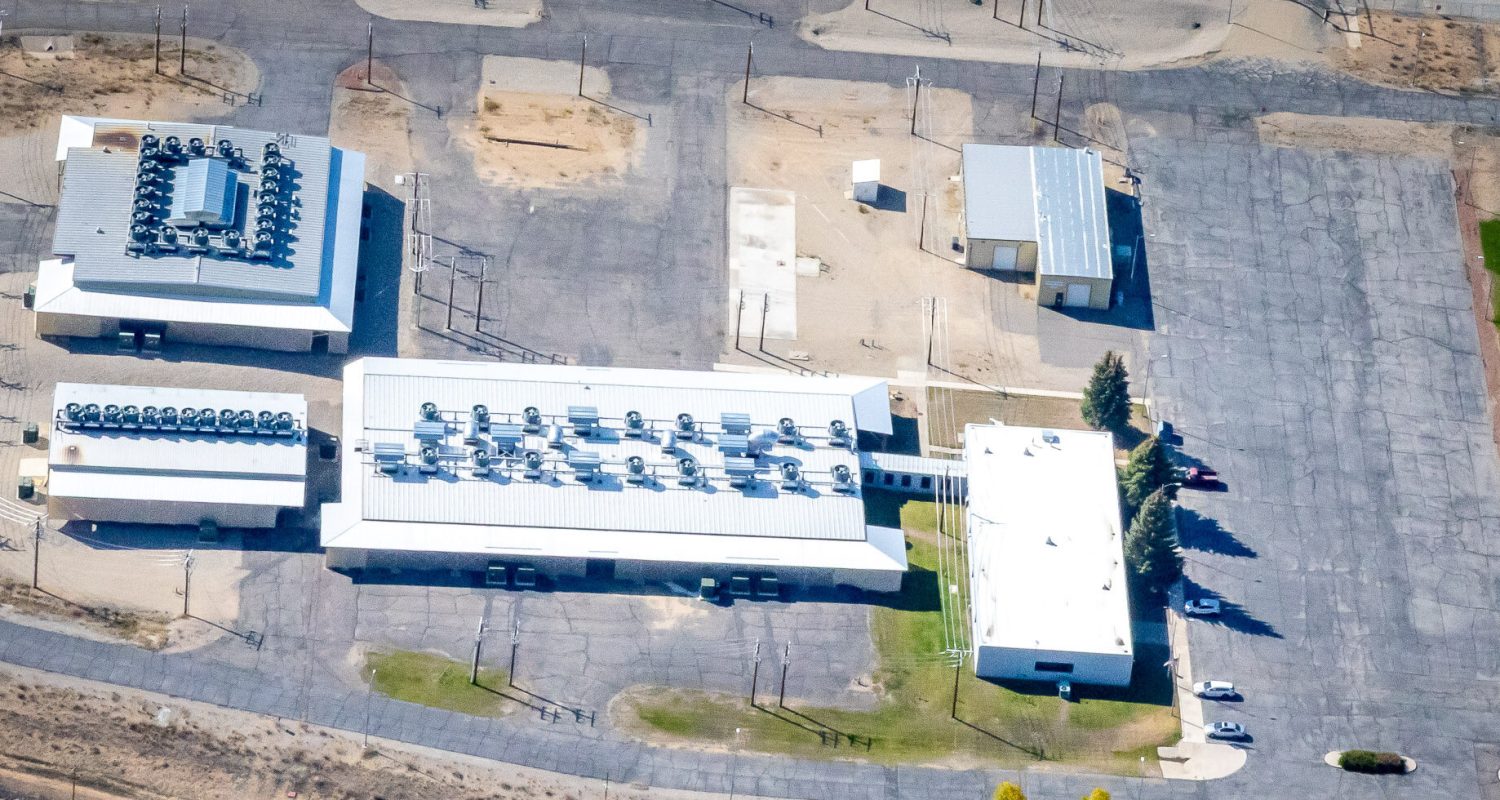
A data center is a broad term generally used to describe warehouses of computing equipment dedicated to a particular service. While data centers have been around for decades, the rise of cryptocurrency mining and artificial intelligence (AI) have exponentially increased the demand for large, often single-purpose data centers.
If you use the internet, you’re using data centers. If you have cloud storage or email, that data is stored in data centers. These “traditional” or “retail” data centers have existed in Montana for decades, typically needing about 1 MW of electricity. Even with website retrieval, data storage, etc. the bulk of energy use is typically on the end-user side. This even holds true for more energy-intensive activities like streaming video and audio. If you are streaming a TV show online, the device you’re streaming on is using more energy than the data center in that relationship.
The advanced computer chips that make artificial intelligence possible (“graphics processing unit” or GPU)have radically changed data centers. It is becoming “ordinary” for new data center proposals to request 1000 MW of electricity, more power than all of NorthWestern Energy’s existing Montana customers use (~760 MW on average). These large, “hyperscale” data centers often cater to a single purpose — such as artificial intelligence or cryptocurrency — and operate on a wildly different scale in terms of impacts to energy and water resources.
**************************************************
Why are data centers a problem now?
The rise of mining cryptocurrency and “generative AI” or “gen-AI” have increased demand for large hyperscale data centers. Around a decade ago, cryptocurrency mining data centers started to come to Montana, significantly raising the demand for energy. The AI projects currently proposed for Montana dwarf the crypto mining projects. Quantica, an AI data center proposed for Broadview, MT, wants up to 1000 MW of power for its data center. All of NorthWestern customers currently need about 750 average MW of electricity.
NorthWestern Energy has signed letters of intent to three data center companies totalling 1,400 MW of electricity. That would represent an existential change in Montana’s relationship to energy.
These energy demands threaten to become a climate, water, and energy disaster.
- Cryptocurrency is a virtual currency that only exists as computer code. Proponents of crypto tout its decentralized nature and “secure” transactions through a public ledger called “the blockchain” that construct a financial system apart from the world’s traditional banking systems. Through a computational process called “mining,” users can sometimes earn cryptocurrency without having to buy it outright. Huge facilities are dedicated to this mining, and the process is incredibly energy intensive.
- Gen-AI platforms are able to generate images, imitate human speech, read and write emails, or even have chat conversations with humans on the other end. The intensive computing demand of generative AI means that data centers are no longer just warehouses that store data for many users; rather, they use huge amounts of energy to create images, videos, and sounds from compiled art and content (often harvested without permission or compensation). With AI, the tool uses an incredible amount of energy before the consumer even interacts with it, and then huge amounts again when prompted by a consumer.
**************************************************
Data centers in Montana
In December 2024, Montana’s monopoly utility NorthWestern Energy announced plans to supply up to 400 megawatts of electricity to two data centers, with initial phase service beginning in 2026 and 2027. NorthWestern’s current annual load is about 750 average megawatts, making this proposal a more than 50% increase in annual demand for energy.
In July, NorthWestern announced more plans to supply data centers with electricity, committing to up to 1000 megawatts to Quantica Infrastructure, LLC. Alarmingly, these announcements don’t come close to reflecting all of the data center development ambitions discussed in NorthWestern’s shareholder calls, nor do they capture the developments happening outside of NorthWestern’s service territory.
Rightfully, these announcements raised concerns across the state, including from the Montana Public Service Commission (PSC) and organizations like MEIC. Since that time, MEIC and a number of nonprofit organizations and citizen groups have pushed back against the unreasonable, unregulated plans that NorthWestern Energy is making to cater to data centers.
An unfortunate status quo of secrecy surrounds data center development in Montana. Publicly available versions of the electricity service Letters of Intent between NorthWestern Energy and the data center companies are heavily redacted. With the revelations around the U.S. that utilities are using ratepayers to fund discounted rates for data centers, Montanans should be concerned.
Butte residents became extremely concerned about a data center proposal in the city when it came out that Sabey Data Centers had been in private conversations with Butte-Silver Bow County Commissioners for close to a year. This video documents a community conversation to discuss the proposal from Sabey Data Centers.
**************************************************
Environmental Impact
Data centers can be a nightmare for water resources and the climate.
- Just one data center can consume as much as five million gallons of water in a day between on-site use for cooling and off-site use for energy generation.
- The majority of water consumed on-site at data centers is drinking water grade — and one big tech company’s scope-1 water consumption in 2023 was roughly equivalent to a major beverage company.
- Data centers are warehouses of electronics running at high temperatures and are prone to fires. In Ohio, two Amazon data centers called out the fire department 84 times in one year (2021) and those two data centers pay zero in property taxes. In Montana, data centers have incredibly low property tax rates which are unlikely to cover the true costs to the community.
- The Great Oak subdivision lies approximately 600 feet from an Amazon Web Services (AWS) data center cluster in western Prince William County, Virginia. Since 2022, residents have complained of constant, low-frequency industrial noise disrupting their sleep and shaking their homes.
- One cryptocurrency operation reinvigorated the Hardin Generating Station, a 115-megawatt coal-fired power plant that was on the brink of closing after NorthWestern Energy declined to acquire the plant in 2018. Shortly thereafter, the plant was purchased by a cryptocurrency company and now it appears to exist solely to provide electricity to mine cryptocurrency. The plant uses millions of gallons of water a day from the Big Horn River.
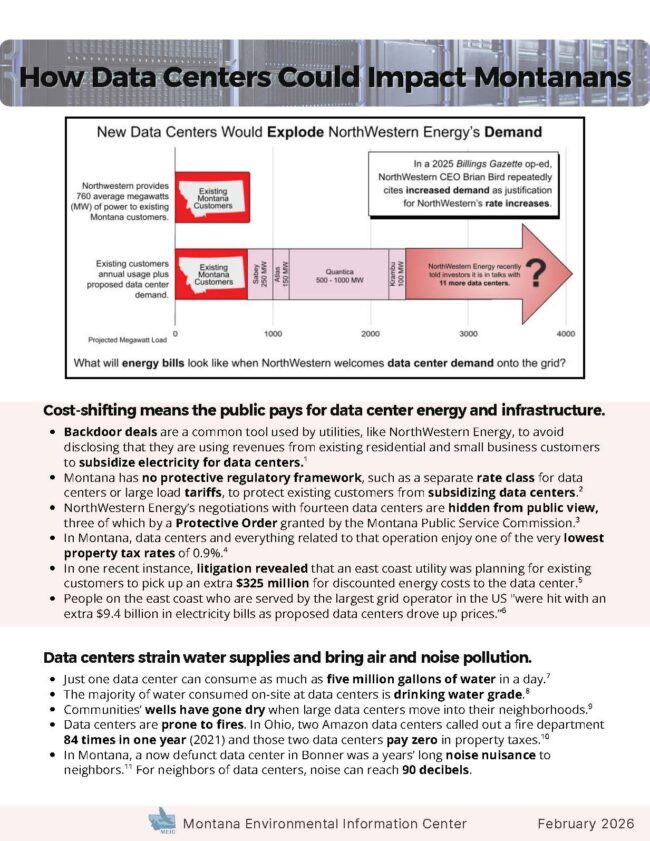
Open this fact sheet for more environmental, energy, and economic impacts.
Impact to Water
Data center operators largely conceal their water usage, and it is very difficult to find publicly available information on the exact amounts of water consumed by individual data centers. A study conducted by Landon Marston, Ph.D., P.E., M.ASCE, an assistant professor of civil and environmental engineering at Virginia Tech, found that data centers are among the top 10 “water-consuming industrial or commercial industries” in the United States.
And as AI data centers require more computational power, their appetite for water for cooling is growing rapidly.
For example, through a protracted legal battle, Google’s data centers’ water usage in The Dalles, Oregon, was ultimately disclosed to the public. That disclosure revealed that they consumed more than 355 million gallons of water in 2021, more than triple what they were using five years earlier in 2016.
Data centers consume and contaminate huge amounts of water.
Water Consumption
Data centers use water in three major ways: Water used on-site (scope-1 usage); water used off-site (scope-2); and water used in the supply chain to create parts for data center hardware (scope-3).
Scope-1: Water used on-site to cool data center computers.
If you’re an avid computer user, you’ve probably noticed that your machine can get hot when it’s streaming video, running a graphics-heavy program like an online game, or even downloading large files. With processes as complex as generative AI and mining cryptocurrency, the computers in data centers can get hot and raise the temperature of the entire facility – fast. Not only is there typically an HVAC system that controls the temperature of the interior of the facility, but there are systems to cool the computers themselves. In many cases, the system to control temperature in the building is interconnected with the system to cool computers, like an HVAC system on steroids which can also control humidity and dust.
In addition, the BBC reports that fan-based air cooling is no longer sufficiently cooling some operations, so many facilities will be shifting to water or fluid-based cooling systems.
If computer servers get too hot, their processing speeds slow down, and they can also suffer damage from overheating or even catch on fire. Water – or a water-based coolant fluid – is used to keep computer servers cool.
There are many kinds of cooling systems available, and they rely upon different balances of energy use and water use. Data centers generally use a mix of closed-loop, open-loop, and/or fan-based cooling systems.
- A fully open-loop system means water or water-based coolant fluids are continuously pumped in, about 80% of the fluid is evaporated off and the remainder is discharged into a community’s wastewater treatment system, if there is one.
- A closed-loop system uses coolant fluids that are contained in piping that exchange heat with heat exchanger equipment, without exchanging fluids. A closed loop system typically then dumps its heat through an interconnected open-loop system, or through fan-based cooling systems, misters, or other means. Although closed loop systems use less water, they rely on chemical slurries to manage temperature, prevent corrosion, inhibit mineral scaling, kill microorganisms, and more. Those fluids are discharged periodically. When that water leaves the site, “it can carry nitrite, glycol, and heavy metals at thousands of times the limits set for surface waters,” according to water advocate group KETOS.
Water Contamination
Water contamination by data centers is also extremely concerning. Data centers use huge amounts of water, and that means they also create huge amounts of wastewater. Most of that waste is “cooling effluent.”
If water is used cyclically, it concentrates pollutants. For instance, many people will notice that their tea kettles, showerheads, or faucets build up with calcium or lime concentrate over time. Data center cooling systems can contain chemical slurries that serve to inhibit mineral scaling, as well as prevent corrosion, manage temperature, kill microorganisms, and more. These mixtures can contain nitrite, glycol, and heavy metals at much higher limits than those set by government agencies for surface waters. The BBC has also reported that some of these cooling effluent use refrigerants that contain forever chemicals known as PFAS.
Without regulation, public wastewater treatment plants may be on the hook to treat all of that wastewater. If there isn’t a wastewater treatment plant nearby, then the water could be discharged directly to waterways or land. Most of Montana is rural, meaning there is no local wastewater system or municipality nearby. In the case that a wastewater treatment plant is available, data centers are set to produce wastewater on a scale most existing facilities aren’t prepared for, and they may introduce pollutants that they aren’t prepared to treat. For example, wastewater treatment plants do not treat for chlorides, which are used as water softeners to reduce mineral scaling in piping.
If a community has an existing water quality issue, a data center could dramatically exacerbate it, such as a community in Oregon that saw a nitrate pollution problem skyrocket when an Amazon hyperscale facility’s cooling system concentrated existing nitrate pollutants and discharged it back into the county wastewater system.
Scope-2: Water used off-site.
Scope-2 usage refers to the water that is not used by the data center but instead is needed to generate electricity to power the data center. The volume of water consumed per kWh of electricity generated varies based on the type of power plant, primarily due to the different cooling methods employed.
- Renewable energy from wind, solar, or hydro does not require cooling.
- Coal, gas, and nuclear power generation generally rely on large amounts of water for cooling. For example, the Colstrip plant, a coal-fired power plant in Montana, uses about 12 million gallons of water per day for cooling.
Scope-3: Water used in the supply chain.
Scope-3 usage accounts for the water used in the supply chain to manufacture the hardware (computer chips and servers) that make up a data center. These manufacturing processes are extremely water-intensive though largely obscure and difficult to enumerate. For example, Apple’s supply chain was responsible for an estimated 99% of its total water footprint in 2024, according to the company’s Environmental Responsibility Report.
**************************************************
Energy Concerns
- In 2025, energy grids around the U.S. blew past annual peak output projections months before the hottest days even arrived, and home air conditioners were competing with data centers for that power.
- In early 2025, a fluke caused 1,500 MW of data center demand to switch to onsite generation and vanish from the east coast grid, causing a huge surge in excess electricity. Rapid massive changes in energy consumption such as this one can cause grid failures and blackouts.
- In February 2021, Winter Storm Uri brought several days of freezing temperatures that broke Texas’ energy grid. Millions of residential customers lost power while industrial loads, like data centers, chugged along.
- Some data centers are scoring below-market electricity rates with public utilities through secret special contracts and terms that are not publicly available, severely disadvantaging existing ratepayers. In Montana, the PSC has ruled that these contracts do not have to be shared with ratepayers and the general public.
- In some cases, data centers and special contract power plants bid on colocation deals that would place them behind the grid interconnection and then argue that they shouldn’t bear any costs of transmission, even though they are connected to the transmission system and could result in higher bills for existing customers.
**************************************************
Data Center Job Promises Often Fail to Deliver
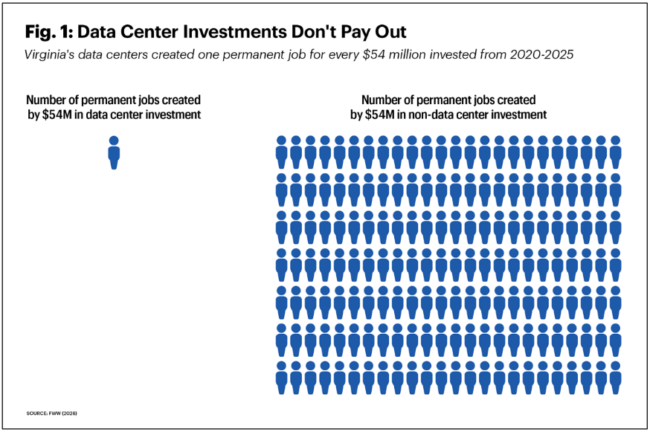
Credit: FWW 2026
Data center developers make big promises about job creation, but the reality is often disappointing.
In fact, a January 2026 study by Food and Water Watch showed that as few as 23,000 people worked in the data center industry in 2024. Given that about 4,000 data centers were operational in 2024, that’s an average of approximately six people being employed per data center facility.
As with all data center developers claims, getting any promises in a legally-binding contract is the only way to protect communities from undelivered promises.
Explore the realities behind these promises by clicking the arrows below.
Promise: Data centers create hundreds of permanent jobs per facility.
Reality: Studies have shown that typically only a handful of people end up with permanent data center jobs.
A Wall Street Journal article titled “The AI Data-Center Boom Is a Job-Creation Bust,” the chief executive of data-center operator Patmos Hosting shares that, “Data centers have rightly earned a dismal reputation of creating the lowest number of jobs per square foot in their facilities.”
In fact, a January 2026 study by Food and Water Watch showed that as few as 23,000 people worked in the data center industry in 2024. Given that about 4,000 data centers were operational in 2024, that’s an average of approximately six people being employed per data center facility.
A 2025 Business Insider analysis by Hannah Beckler found that even the largest data centers employ fewer than 150 permanent workers, with some employing as few as 25 people – far fewer than many claim they will employ.
Promise: Data center developers use tax subsidies to create hundreds of well-paying, permanent jobs.
Reality: Few data centers ever hire as many people as they claim, instead taking sweetheart tax breaks for little in return.
It’s a country-wide trend: data centers get huge tax breaks to create jobs and fail to deliver.
- The Switch Inc. data center in Michigan received tax breaks in 2015 after promising to create 1,000 jobs in 10 years. But by 2022, the company had only hired 26 people, and those 26 jobs’ average wage was below $38,000 per year.
- Good Jobs First has pointed to incidents where a data center was given millions in subsidies in exchange for job creation. When fewer jobs were created than was expected, it calculates out to $6.4 million in subsidies per job.
- According to information from the Virginia Economic Development Partnership, data centers in Virginia generate just one permanent job for every $13 million invested.
- CNBC reported that a Microsoft data center in Illinois received more than $38 million in state sales tax exemptions in 2021, but created only 20 permanent jobs.
Promise: Data center developers hire local labor to construct data centers.
Reality: Data center developers are going to use the most economic construction means available.
According to a recent op-ed by Ayana Gray (Great Falls resident and graduate of Cambridge in Ethics of AI, Data, and Algorithms), the controversial Butte Sabey project has made big claims about the 600 temporary construction jobs that it will create.
Gray writes, “Sabey has stated that they have met with local unions and they prioritize local hiring where possible, but it is worth noting that Sabey operates their own construction company. Even the Butte-Silver Bow Committee has considered that there exists the possibility that outside construction labor could be brought in, potentially putting strain on rental equipment markets, which would be to the detriment of local construction companies.”
Communities must get promises from data center developers in legally-binding contracts – otherwise, there is nothing to hold them to these promises.
Promise: Data Centers run generative AI, which can help workers increase productivity and output.
Reality: Generative AI may replace human workers at rates that are difficult to replace.
For-profit companies are incentivized to increase profit margins for shareholders. One way to do that is to cut the workforce. If companies can convince their workforce to train its own replacement and increase profit margins, there’s no reason they wouldn’t do that. Elon Musk has claimed AI and robotics will ultimately “replace all jobs,” which would be great in a society that provides for everyone’s needs; however, in our current systems, people need money to buy food and pay bills.
Food and Water Watch reports, “Speculations on U.S. job displacement vary wildly, from 1 to 2 percent over the next 20 years to one quarter by 2030… Job displacement may already be occurring. Jobs reliant on analytical or administrative skills — such as financial clerks or data entry keyers — are more exposed to AI than those reliant on hands-on mechanical skills, such as nurses or maintenance workers. Younger tech workers may be disproportionately impacted, facing increased unemployment rates compared to other sectors and ages. If AI reduces entry-level roles, there is a risk that this next generation of workers will not be trained, leading to alienation. Moreover, tech companies are already laying off workers to focus on AI growth. In October 2025, Amazon attributed 14,000 planned layoffs to a need to ‘organize more leanly’ in order to fully invest in AI, following the moves of other companies like Salesforce, Duolingo, and Lufthansa.… AI has become a convenient scapegoat for companies looking to lay off workers, offloading the responsibility onto faceless technology.”
What are state governments doing about it?
Montana currently does not have any state regulations limiting energy or water use of data centers. A study resolution on data centers (HJ 46: Sponsor Rep. Millet, R-Marion) did not pass out of committee during the 2025 Montana Legislative Session. However, HB 424 (Rep. Katie Zolnikov, R-Billings) did pass and extended the low property tax rate that data centers enjoy (0.9%) to new generating facilities connected to a data center.
In April, the Texas Senate unanimously passed legislation that would regulate data center and utility relationships. The legislation addresses concerns around transmission cost recovery, grid load forecasting, and outage protections for residential consumers. If a state with hundreds of data centers is trying to add protections retroactively, Montanans should learn from their experience and protect existing customers before they are harmed.
Oregon and Virginia have created unique rate classes for data centers to help protect residential customers and other medium and industrial customers from subsidizing the costs associated with the data centers. (Although, it appears that utilities are already trying to find loopholes in Oregon.)
Wyoming, North Dakota, and South Dakota have large load tariffs in place, which are extra fees for large energy customers like data centers that are intended to protect ratepayers from bearing the financial burden of data centers. While these are important steps forward in protecting existing utility customers, they are insufficient on their own to guarantee data centers pay their fair share.
Idaho State legislators introduced a bill in 2025 to protect utility customers from cost-shifting. “How are you going to tell Grandma it’s OK for her — on a fixed, limited income — that she’s going to subsidize the next major AI plant somewhere?” asked Rep. Stephanie Mickelsen, R-Idaho Falls. The bill did not pass.
**************************************************
Proposed Solutions
MEIC is pushing for transparency and smart regulation. We need answers. We need solutions. Here are two living documents that track some of the big questions that need answers and that propose some of what we see as basic regulatory needs.
More resources and reading:
Information about Quantica from Ayana Gray, a resident of Great Falls, Montana who recently finished up a Master’s degree in the Ethics of AI, Data, and Algorithms at the University of Cambridge.
- Quantica, BSDI Project: What We Know and What We Don’t Know (summary)
- Quantica, BSDI Project: What We Know and What We Don’t Know (full with sources)
Find posts and articles about data centers on our website here.
Resources:
https://datacentremagazine.com/articles/us-president-donald-trump-building-a-data-centre-empire
https://www.theguardian.com/environment/2025/apr/03/trump-fossil-fuel-donors-data-centers
https://www.politico.com/news/2024/05/09/trump-asks-oil-executives-campaign-finance-00157131
https://www.bbc.com/news/articles/ce8g2kpzx0go
https://www.cbsnews.com/news/trump-coin-dinner-with-president-meme-coin-price/
https://ketos.co/discharge-from-ai-data-centers-and-how-to-mitigate-contamination
https://sustainabilitymag.com/news/how-are-companies-pioneering-data-centre-zero-water-cooling
https://www.bbc.com/news/articles/cp8zd176516o
https://www.eesi.org/articles/view/data-centers-and-water-consumption
https://arxiv.org/pdf/2304.03271
Tortorelli, Paige et al. “In race to attract data centers, states can forfeit hundreds of millions of dollars in tax revenue to tech companies.” CNBC. June 20, 2025;
Illinois Department of Commerce & Economic Opportunity. “Data Center Investment Program 2022 Annual Report.” 2023.
https://www.foodandwaterwatch.org/wp-content/uploads/2026/03/RPT2_2602_DataCenterMoratorium.pdf
https://www.foodandwaterwatch.org/wp-content/uploads/2026/01/RB_2601_DataCenterJobs.pdf
Montana Environmental
Information Center
Clean and healthful.
It's your right, our mission.
Stay Connected
P: (406) 443-2520
E: meic@meic.org
324 Fuller Ave, #C-8
Helena, MT 59601
Mailing addresses:
P.O. Box 1184, Helena, MT, 59624
225 W. Front, Missoula, MT, 59802