by Derf Johnson
Over the past several years, I’ve noticed a troubling trend in the way the Montana state government interfaces and integrates the public into its decision-making. Increasingly, the voices of Montanans and the opportunities to participate and request public documents are being pushed out in favor of secrecy and “efficiency.”
This is especially alarming, as the right for the public to know and participate in governmental decision-making is critical to our democracy and ultimately our fundamental, Article II Constitutional rights in Montana. These Constitutional rights are not just boilerplate language tossed into our constitution that the government can choose to ignore; they were specifically added into our constitution after a century of mining oligarchs controlling our government and the purposeful obfuscation of government decision-making by the likes of the Anaconda Company.
Recently, I’ve discovered that hardrock mining exploration licenses no longer have a notice and comment process associated with them unless the DEQ decides a project may be controversial enough to do so. That’s a problem, as how can the DEQ know about the full suite of environmental issues and concerns from the public unless it, well, asks the public? Mining activities can pose extreme risks to the environment and property rights, and this is exactly the type of activity contemplated by our Constitutional Convention delegates when they drafted the Article II rights.
DEQ is using loopholes in order to avoid its obligation to hear from the public. At the public meeting for the proposed Bridger Pipeline in Miles City, the event was more akin to a tabling exercise for industry than a public meeting. Commenters were not allowed to speak their comments aloud but rather were restricted to written comments. The company’s “public” meeting for the proposed gold mine on the Blackfoot River was similar, but even worse; while not an official publicly noticed meeting, DEQ had a table at the event as a “vendor” and spoke with members of the public, all while not on the public record (see image below).
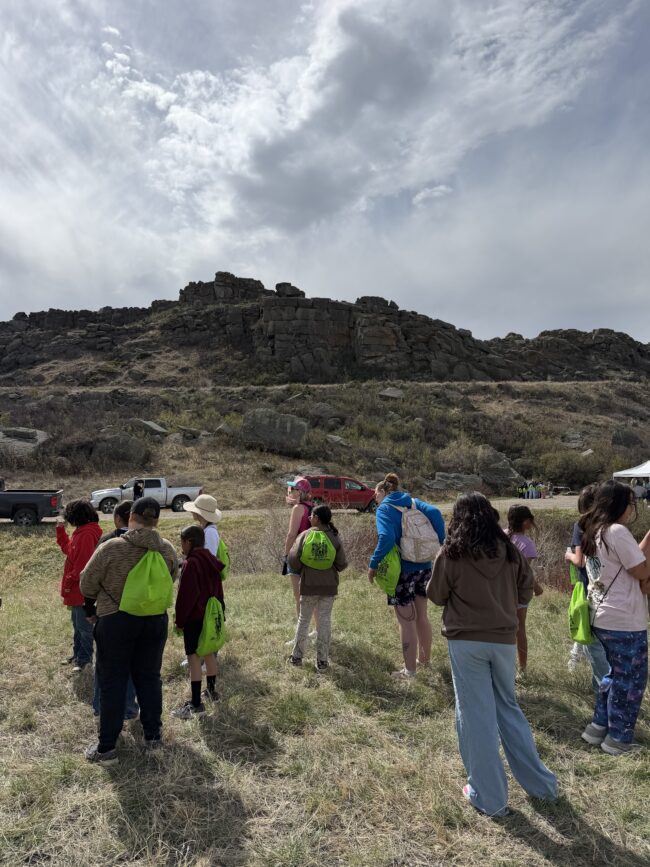
MEIC’s Derf Johnson spent Earth Day with students on the Fort Belknap Indian Reservation, teaching them about our Right to a Clean and Healthful Environment.
The Governor’s Energy Task Force is taking a page out of this book, hosting multiple tabling events around the state in order to preach — but not listen.
Unfortunately, the weakening of Montana’s Rights to Participate and Know about environmental permitting is not limited to administrative agencies. In 2021, the Montana Legislature passed HB 599 (Rep. Steve Gunderson, R-Libby), which dramatically limited public input regarding the permitting of gravel mines. Now, the most frequent calls into our office are from distraught landowners with massive gravel pits going in next door — with little recourse unless the law changes (see article on pg. 10).
This trend has also borne itself out in the Governor’s Office. Back in November 2021, MEIC submitted an information request to Gov. Greg Gianforte regarding his office’s communications with the mining industry and specifically its decision to drop the “Bad Actor” enforcement action against Hecla Mining Co. Ultimately, our information request was rejected, and we are still in litigation. We have not been provided with the vast majority of the relevant information that we requested, and it is now close to five years since our original request. Needless to say, access to information has an expiration date. If the government is able to tie up its required disclosure in court for years on end, to the point where accountability becomes obsolete, then what good is our right? Now, the Governor’s Office is arguing for a massively expanded “gubernatorial privilege” that would, if accepted, basically exonerate the Governor’s Office from having to comply with our Constitutional Right to Know.
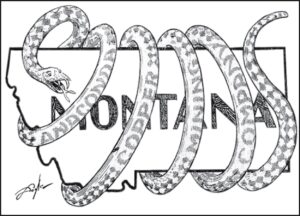 Not to be outdone, back in the summer of 2024, the Montana Legislature attempted to prohibit the public from seeing its files on bill drafts, colloquially known as “junque” files. This was a big deal, as these files contain a wealth of information that the public has found to be instructive and informative on the legislative process. MEIC and partners brought suit against the Legislature for this attempt to thwart constitutional transparency, and the case is currently being considered by the Montana Supreme Court.
I suspect that — at least in part — the government would argue that public processes are cumbersome, and for the sake of efficiency, the public should just take it on the chin. That’s not just inappropriate and probably illegal, but will ultimately lead to poor decisions by our leaders and agencies. Without an adequately-informed public and without the opportunity to meaningfully participate in the mechanics of our government, the decisions will only reflect and cater to those with access to the Governor, Legislature, and agencies — namely those with money and influence well beyond the average Montanan. I can guarantee you, that’s not what Montanans want.
This article was published in the June 2026 issue of Down To Earth.