by Anne Hedges
On January 1, 2026, NorthWestern Energy acquired a whopping 592 megawatts (MW) of the Colstrip plant. This increased ownership of the Colstrip plant has nothing to do with reliability or affordability — as NorthWestern often argues. Instead, it is far more likely that it is a result of its desire to continue overcharging customers for its relatively small share of the Colstrip plant and to sell electricity from its newly acquired shares of the plant to data centers. A 2025 presentation from one of its top executives relayed that NorthWestern “[w]ill meet additional demand from data centers with additional shares of Colstrip.” So what’s really going on with NorthWestern acquiring a huge new share of the Colstrip plant and what does that have to do with data centers?
It’s important to put NorthWestern’s acquisition of this superpolluter in historical context. In 2007, NorthWestern bought 222 MW of the Colstrip plant for $187 million. In 2008, the Montana Public Service Commission (PSC) allowed it to charge customers $407 million at a 10% return on equity until 2042 for that same 222 MW share. This $220 million windfall for NorthWestern is a powerful motivator for it to do whatever is necessary to keep the Colstrip plant operating until 2042, regardless of the impact to Montanans’ monthly electricity bills. Existing customers don’t need the additional 592 MW, but keeping the plant operating allows NorthWestern to continue collecting outlandish revenue from customers. The profit from its original 15% share of the plant provides a strong incentive for NorthWestern to acquire more of the plant as other owners depart to ensure it keeps operating, regardless of whether or not Montana customers actually need the extra power.
For context, NorthWestern currently provides about 750 average MW of electricity to customers from various sources. It owns its original 222 MW share of the Colstrip plant, as well as 10 hydroelectric dams (450 MW of capacity); a gas plant near Anaconda (150 MW); its new outrageously priced peaker gas plant near Laurel (as much as 175 MW); and two small wind projects (51 MW). Additionally, it has contracts to buy about 748 MW of electricity from other projects: wind, a smidgeon of solar, two small gas plants, and two small, highly-polluting fossil fuel plants that burn waste coal and petroleum. (NorthWestern’s recent 20-year plan indicates it intends to eliminate its very affordable contracts with wind and solar projects over the next few years.) In short, NorthWestern doesn’t need more power to serve its existing customers.
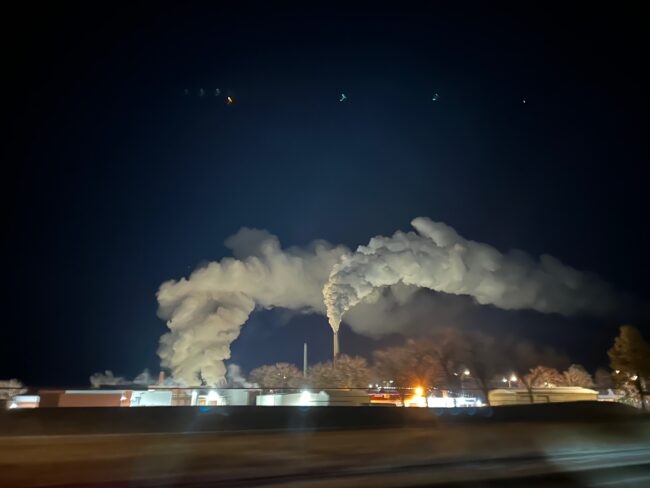
The Colstrip coal-fired power plant. Photo by Krystal Two Bulls
But NorthWestern is incentivized to grow, to supports its CEO’s $4.8 million paycheck, and to continue to charge customers for the existing share of the Colstrip plant. Enter Puget Sound Energy (PSE) and Avista Energy, utilities in Washington State who wanted to exit the plant for financial and legal reasons. Both utilities transferred their shares of the Colstrip plant to NorthWestern at the beginning of 2026. But NorthWestern doesn’t need this tremendous amount of new electricity. In September, NorthWestern asked the PSC to charge customers $18 million for upkeep of Avista’s 222 MW share of the Colstrip plant and it requested that the Federal Energy Regulatory Commission (FERC) allow it to create a merchant arm to sell the excess 370 MW of power it acquired from PSE to an energy marketer, similar to Enron.
MEIC (represented by Earthjustice) and the Montana Consumer Council objected to NorthWestern immediately charging existing customers an extra $18 million for Avista’s 222 MW share of the Colstrip plant before demonstrating that customers actually need the additional power. In January, the PSC decided to allow NorthWestern to charge customers that $18 million but to investigate further whether customers needed that extra share of the plant. The hearing on that case is scheduled for August. FERC did something similar after objections from MEIC, again represented by Earthjustice. FERC agreed that NorthWestern’s application was deficient and requested additional information. NorthWestern responded but again failed to provide the legally required information to prove that existing customers would not subsidize the electricity it sells through its new merchant subsidiary. MEIC again objected because NorthWestern failed to demonstrate that existing customers will not be subsidizing this 370 MW share of the plant that it admitted it will sell “below cost” into the market.
Unfortunately, in late February, FERC ruled that the PSC is responsible for ensuring the NorthWestern’s customers aren’t paying the costs to operate this new share of the plant. Montanans should not have to subsidize the power that NorthWestern will provide to data centers by paying more for upkeep, breakdowns, and escalating fuel costs of an expensive power plant that its customers don’t need. Data center developers are perfectly capable of paying their own way, but now it’s up to the PSC to protect customers from paying for costs imposed by data centers.
This article was published in the March 2026 issue of Down To Earth.