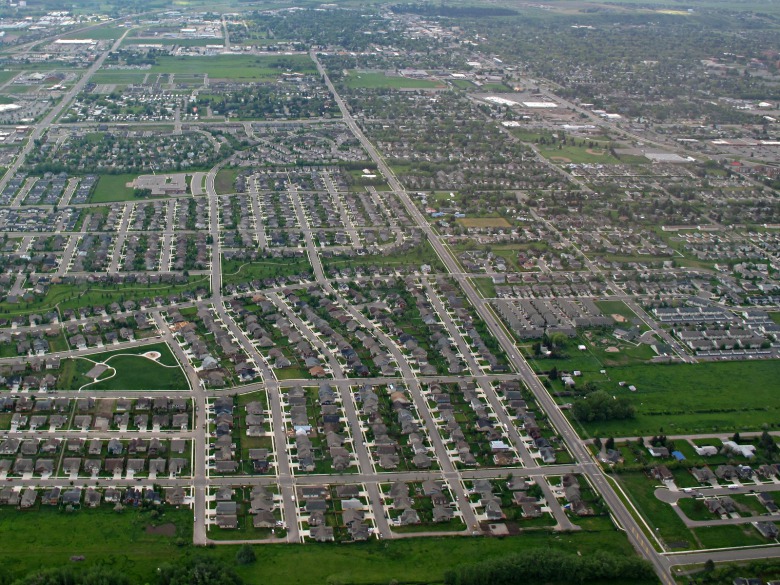
Photo of Gallatin Valley used with permission from Mountain Journal and EcoFlight.
For the past several decades, Montana’s population has been steadily growing. With the COVID-19 pandemic and increasing popularity of telecommuting, Montana’s growth has accelerated, and the Big Sky State is one of the fastest growing states in the country. Growth has been primarily concentrated in the western half of the state, including places like Bozeman, the Flathead Valley, and the Bitterroot, but even rural areas in Montana are now experiencing accelerated growth. The increase in population creates a demand for more housing and a need for greater infrastructure, such as roads, sewer lines, and water supplies. The increase in population is putting increased strain on Montana’s environment by impacting the ground and surface water, air quality, wildlife and wildlife habitat, agricultural resources, and community pocketbooks.
Only a small handful of Montana’s 56 counties have implemented county-wide zoning. In the unzoned counties, conflicts between neighbors, businesses, and community members will only increase with time due to haphazard and poorly planned development. Montana’s prime farmland is being eaten up by poorly planned subdivisions and unrestrained growth. Our core urban areas are being surrounded by houses using septic systems and water wells that require at least an acre. This type of development makes the installation of future community sewer or water systems difficult and prohibitively expensive, and is leading to leapfrog development, in places such as Lewis and Clark County. This type of sprawl also often requires people to be dependent upon cars for transportation, impacts air quality & water quality, causes habitat fragmentation, and leads to less desirable communities.
MEIC is working to solve these problems. MEIC works at the Montana legislature to promote and support laws that will encourage responsible growth management and prevent sprawl. We watchdog the Montana Department of Environmental Quality to assure that land use permitting activities protect the environment and that the agency is accountable to the public. We also provide advice to citizens and communities across Montana worried about inappropriate subdivisions and poor planning practices.
Want to learn more? Get in touch or learn how you can get involved.