“Forever chemicals” or PFAS are increasingly concerning in our waterways, food, and even our bodies.
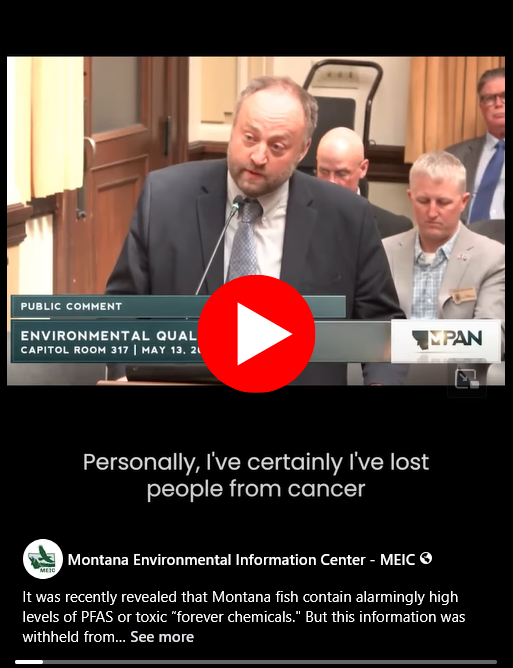
MEIC’s Derf Johnson recently appeared before the Montana legislative Environmental Quality Council (EQC) interim committee and argued that Montanans deserved access to this information long before it was actually released. He warned that we need to confront this problem head-on before the ecological and economic costs become even greater.
PFAS stands for per- and polyfluoroalkyl substances. They are a large family of man-made chemicals often used to make products stain-resistant, waterproof, and non-stick. Because of their virtually unbreakable carbon-fluorine bonds, they persist indefinitely in the environment and are often called “forever chemicals.” PFAS exposure can lead to increased risk of certain cancers (such as kidney or testicular cancer), liver and kidney damage, immune system suppression, developmental effects in infants and complications during pregnancy.
Groundwater and surface water test samples across Montana have identified unsafe levels of PFAS, including widespread PFAS contamination in popular fisheries like the Fort Peck Reservoir, the East Gallatin, the Yellowstone River, and many more.
While state agencies updated the Montana Sport Fish Consumption Guidelines in April 2026, much of this information was known – but not made available – during the 2025 Montana legislative session. In fact, Montana PBS found that not only had the Montana Department of Environmental Quality found enough PFAS in fish to merit a consumption ban in some parts of the state, but that the Governor’s office suppressed the release of that report in 2024.
In this webinar, MEIC gathered three experts to discuss what we know about PFAS in Montana, how we get exposed to these chemicals, and what can be done to prevent and remediate this pollution.
As with most pollution, it’s better to prevent it than try to remove it later. For some kinds of PFAS, treatment is estimated to cost $20 trillion to $7,000 trillion per year.
Our state agencies need to be held accountable to not only protecting our water but also being transparent about pollution that can harm us – when that information is available, not years after the fact.
Explore known PFAS contaminated sites by clicking the map below or this link.
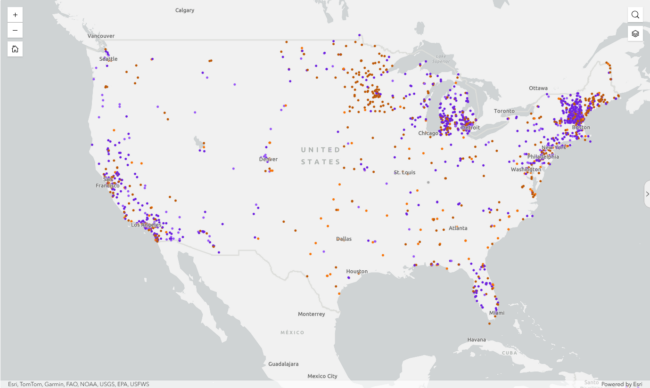
PFAS Sites and Community Resources – An interactive mapping project from the PFAS-REACH team